I am hating this most recent iteration of the Arab Israeli conflict. That is mostly because I'm not sure what is behind it all: Muslim factionalism, hatred of Zionism and Jews, or something else that I don't yet understand. But I do know that way too many children are dying in this war, from the three young students found murdered on the West Bank, to the hundreds of small innocents being sacrificed in schools, hospitals, and homes in Gaza, in my opinion, for no good reason. I have been sick at heart about this for weeks now.
And yesterday, as I attended the funeral of the mother of one of my long-time, dear friends, the war in Gaza took an unexpected and personal turn. At the funeral, the large vociferous family of the deceased made what is so often a sad occasion into a stunning tribute to their mother, grandmother and great grandmother. They spoke to her life as a celebration of love, and memories, and stories were shared, and there was much laughter among the tears, and it was a most loving time. And there was much visiting and sharing among those attending, and I was able to visit with people who I had not seen in a long time.
Among those I spoke with was my dear Rabbi, one of my long-time teachers, an adviser, and a mentor and a friend. It has been some time since I have seen him, and I wanted to find out how he was doing. It was a very hot day and we sat down in a cool place away from the funeral crowd to have a brief visit.
I have known him since I was 5 years old when he first came to our congregation in the early 1950's along with his wife and young family. His oldest son and I are the same age and we are friends now for more than sixty years. Rabbi's son and I were classmates from kindergarten into high school, where he proved himself to be brilliant beyond the rest of us, and entered university at a young age. Rabbi's son and his family have resided in Israel for decades now, and he is a respected and internationally known scholar.
Rabbi is now close to 93 and, I noticed, walking with a cane. As we sat down together, he immediately shared with me something that obviously was at the top of his mind. Every time his phone rings, he told me, he is afraid to pick it up. I could not imagine why, and then he went on to explain to me that his son (my childhood contemporary and friend) has a son who has been called up with the Israeli army, and is now, as I write, serving on the front lines in Gaza. He also casually mentioned that his grandson's particular unit has taken the most casualties. Rabbi is afraid every time his phone rings.
In a moment, a rocket from Gaza, made a direct hit to my heart, as instantly, the war became personal. An Israeli soldier, very much in harm's way, was someone I knew. I have known generations of his family. He has family members who are special to me. The new knowledge sent me into shock. It took a moment to sink in, and then I gave Rabbi a supportive hug. And though I don't usually say prayers, I promised him I would direct all my positive focus and energy to that very place where his grandson stands among those who seek his demise.
Ironically, at the celebratory funeral of woman who lived a fulfilling and long life, I went home with sadness and feeling quite empty, as figuratively, "a rocket from Gaza had created a huge hole my heart".
Friday, August 1, 2014

Sunday, July 20, 2014
Morose or Meaningful? A Daily Scan of the Obits
Last week, I listened to one of my very best friends tell another that she found my daily reading of the obituaries to be "morbid and depressing." Actually, I have never thought of this daily habit as being either morose or depressing and began a closer examination of my motives for regularly checking-out the "obits."
My Grandfather (who we called Poppa) was a no-nonsense, blue collar kind of guy, who used to tell the following joke: "First thing every morning I read the obituaries, and if my name is not listed there, I get dressed and go to work!" Well, as children we thought that was very funny, and it probably laid the foundation for me that looking at the obits was not necessarily sad, but rather an expression of ones reality: either "being", or not "being". And if you are fortunate enough to wake up alive, you simply get on with your day.
In examining my motives, it occurs to me that the regular perusal of the obituaries can tell as much about the obituary reader as about the deceased. For example, one who views the obituaries as "depressing" certainly has a very different view of death, than say, one who finds them "informative."
It could well be personality. We all know, some see the glass half empty; some see the glass half full. I've always been a "half full" kind of person, and try to look at all aspects of life (and death, I guess) in as positive a way as is possible. Knowing who has recently passed on is perhaps part of my will to be aware of what is going on in my community.
I consider a multi paragraph obituary as having historical value as a small part of the greater history of our area. I've always been fascinated by local history, especially family stories, including family trees, marriages, careers, military service, hobbies and interests, accomplishments, and even reasons for death (illness, accident, or old age).
My son the sociologist would also tell me there is much sociological information one could glean from an obit, including the migrations of ethnic groups to our community from around the world, varying religious beliefs which can be reflected in burial customs, traditions and church affiliation, family sizes, divorce and disease rates, etc.etc.
I am a fourth generation resident of my community. My parents, aunts, uncles, cousins, grandparents and great-grandparents lived here. Eighty to a hundred years ago it was a smaller, more intimate place where everyone knew everyone else. I've always believed that in our community there are not "six degrees of separation" but only "two to three" --- especially for those like me --- with long family history here. I am familiar with and recognize many family names, businesses, and other connections. In my various jobs over the years (politics and high-end sales), this awareness of a person's history, affiliations, and friends, political views, likes and dislikes has proven to be very useful. It's also been astute for me to know when a person passed away.
Therefore, scanning and reading the obituaries, which I began doing long ago, is meaningful to me on many levels. I find them to be more interesting than morose. My dear friend may never agree with me and that's OK. And, like my Poppa, if I don't see my name listed in there, I get dressed, and get on with my day!
Saturday, June 14, 2014
Don't Let The Parade Pass You By!
 |
| Enthusiastic parade watchers |
 |
| Wilson High Marching Band |
Many of my friends who did not grow up in Portland say to me that they "just don't get the Rose Festival" or the parade. For many who grew up here, it was part of our childhood and was a magical thing, almost like Christmas in June. It was a unique aspect of life growing up in Portland.
 |
| Oregon State Police Mounted Patrol |
While waiting patiently for the parade, and playing for what seemed like hours, we would finally hear the thump, thump, thump sound of marching bands that meant the parade was getting closer --- seemingly at a snail's pace --- to where we were.
 |
| Rose Festival High School Court |

Nowadays, I simply pack a thermos of coffee, a sweater, a camp chair, and something to read while I wait. This year's Parade Day dawned a bit cloudy, with the promise of sun breaking through later in the morning. And it did prove to be one of those rare, perfect days for parade watching.
One thing that made this year's parade experience a bit different for me, was that I slipped my new iPhone into my pocket thinking I might snap a few photos. Not knowing if it was the warm sunshine or the "high" of being surrounded by so many children having the raucous fun I used to have, but, I went crazy taking pictures.
 |
| Surrounded by Red Heads! |
 |
| Surrounded by Red Heads! |

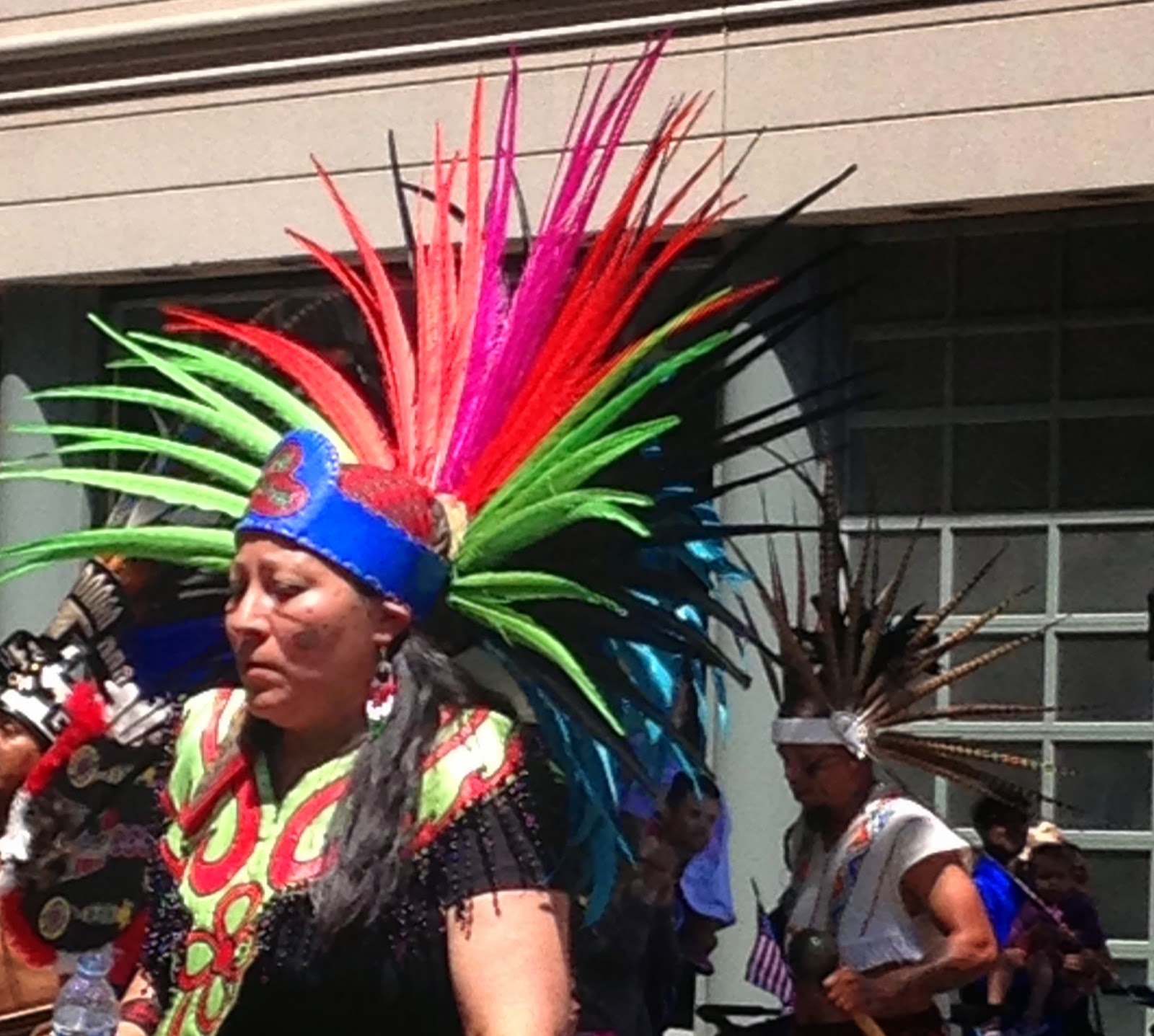


So, I've shared with you some of my memories of Rose Parades past, and offer you photographs from my favorite viewing spot at this year's event. I hope it will bring back memories of parades past in your life.
And, if you missed this year's Rose Parade, you just might want to add it to your calendar for next year, or the year after.
Have
a great summer, and, remember,
"Don't Let The Parade Pass You By!!!"


For Further Information on the Portland Rose Festival, go to the following link: www.rosefestival.org.
Sunday, May 25, 2014
"The Oregonian": Black, White, and Read No More
Remember that joke from when you were a kid --- "Question: "What is black and white and red all over? Answer: a newspaper!!!" Ha! And you thought that was so hilarious and so funny you fell all over yourself laughing. Well, if you juggle the semantics and tense as I've done for this post, it isn't so funny. Newspapers are being "read" no more.
My family has just joined the many others who have given up on our daily newspaper. We cancelled our subscription. This was not done lightly, and frankly, I feel like I am losing an old friend.
Portland's daily newspaper, The Oregonian, (I affectionately call the "O") has been a part of my life since I learned to read. I recall my Mom used it as a tool to help us learn to read. I can go back so far as to remember when there were two daily papers in Portland, the Oregonian in the mornings, and the Oregon Journal in the afternoon. As a young girl, I devoured those papers, absorbing all the news, gossip, cartoons, and advice they offered on a twice-a-day basis. I loved keeping track of what was going on so I could join in conversations with adults, and realized that it put me a step ahead of my classmates at school. I loved reading the paper.
A few times I have appeared in its pages for one reason or another. Most of the "appearances" were favorable and made me proud that I had achieved recognition in our paper. As a young professional I was often asked to write press releases which quite often would appear as articles in the paper. When I owned a small retail business, I regularly purchased advertising in the Oregonian knowing thousands might read about my business. Occasionally, I would submit an article to the editors. If it was published, I felt honored.
For my entire life I have looked to the Oregonian as a resource: it has been my go-to source for current events news, sports, the cultural scene, voting information, advice columnists, horoscope, and my daily scan of the obits. I have this habit of sitting down each morning, in my most comfortable chair, with a cup of coffee and the Oregonian. I've always suspected thousands of others did the same.
Using an iPhone for news will never match that morning experience. There is no sensory feedback in holding an iPhone. The newsprint of the paper smelled of ink, and rustled and crinkled when you turned the pages. And even worse, for those of us advancing toward senior status, it is darned difficult to read the small print on an iPhone, especially in the early morning. My future looms -- less informed and way less fun.
Saying all this, I have not forgotten my many friends and acquaintances who have made their careers at the Oregonian. Many still do. Some have been editors, or reporters or columnists, and some have been involved in circulation and advertising. I looked up to all of them. They worked for an iconic and historical newspaper.
Alas, it seems, declining readership and sales, the increasing trend toward computer technology, as well as a younger generation getting its news from other places, has forced the Oregonian, (and many other daily newspapers) to reinvent themselves. It appears our Oregonian has done this with a sharp knife, slicing away at their award winning coterie of local editors and reporters, and unfortunately relying more on "canned" news from wire services and the big papers back East. Additionally, it seems that news space once filled with news stories, is now filled with advertising. Yuck! Finally, and here is the really sad news. Our staid old historical newspaper is now presented to us in a tabloid format! To me it smacks of the National Enquirer and the New York Daily News and their like, which scream out at us with yellow journalism and quasi-news in huge headlines. I just can't bear it any more.
So, after really, really trying the new-fangled "O" for several months, my family agrees, it is time. We are cutting the cord --- breaking a lifetime habit. After June 1st, we will get the printed Oregonian no more. We might be able to get our news from various other sources, but it won't be the same. RIP.
Wednesday, May 7, 2014
A Birthday With No Memory
 |
| Irma c. 1938 |
Today, Mom turns 90. There will be no celebration, no gala birthday party. The champagne punch will not flow. For Mom, it will be another day of merely existing. For her family it will be a day of remembering.
Today we will take her cake and some gifts, sing "happy birthday" and hope that she will respond in some way. These days dementia allows her to recognize things only when all the synapses in her brain cells are connecting. Lately, the messages seem to be getting through less and less. Mom has been sliding downhill into late stage Alzheimer's and dementia for the last 12 to15 years.
It is hard to pinpoint when it started. I remember, maybe15 years ago, asking her if she could pick me up at the airport, something she often did. She told me it was too hard for her. I didn't realize what that meant. It meant, she couldn't remember how to get there or how to get home.
We talked on a daily basis, she and I. Then one day I noticed she was not calling me. I was only calling her. She couldn't remember my phone number.
She would forget she was not supposed to bend over to take care of her feet. Several times she was rushed to the hospital by ambulance in terrible pain. She had forgotten and reached for her toes, popping out her artificial hip.
It was a slow, insidious process. We began to notice that she was no longer cooking. She could not remember how to put a meal together. She stopped driving after getting lost too many times on her way to shop or do her volunteer work at the library. The progression was so gradual we hardly noticed. At times she talked about feeling like her head was full of cotton. We began to find little stashes of torn up tissues in her drawers. Huh? She always took a brief afternoon nap, and then she began to spend her entire day in bed. She was a woman who loved young children and worked professionally with them as a teacher. We knew something was not right when she began losing her temper with her own grandchildren, and eventually completely lost interest in their activities.
When I tell people that my Mom has Alzheimer's, they inevitably ask me the same tiresome question, "Does she know who you are?" The answer is, "Yes, at some level she recognizes us. On a really good day she might remember my name. On a bad day, she will lower her head and barely respond to anything." I believe we are familiar to her in the way we speak to her, in our demeanor and our appearance. It has taken all of us a long time to realize the depth and complexity of Alzheimer's disease. Essentially, it is a severe brain injury. Understanding it has been a difficult process for us and very likely a frustrating experience for her.
So, on the occasion of her 90th birthday, each of us, daughters, sons in law, grandchildren, nieces and nephews, will remember who she used to be, before this terrible illness took her brain.
IRMA, born in Portland, Oregon, a graduate of Alameda Grade School, Grant High School, and the first in her family to receive a college degree; she was an award winning equestrian, who won dozens of ribbons riding competitively during her high school years; she was a professional preschool and kindergarten teacher for more than 25 years, who was beloved by many hundreds of students who still remember her; she was a fervent FDR liberal who taught her children, nieces and nephews, the importance of equal rights and equal education for all; she loved animals and birds, as long as they were in the zoo, not her own home; she was a marvelous cook; a gardener, and a grandmother who took an active role in raising her young grandchildren; she loved to read and took her children to the library every week; she loved jazz and Broadway musicals, and her family was the core of her existence.
She was a bright, educated, and accomplished woman, who was respected in her professional life. Alzheimer's has taken it all away --- wrecking havoc with her brain and impacting so many of us who love her. We have witnessed the slow mental and physical deterioration of a beautiful and bright spirit, and experienced the frustration, anger, and finally total sadness as we see our Mother and Grandmother disappearing before our eyes.
Today we mark her milestone 90th year and hope we can somehow convey to her our love and pride in the many accomplishments of her life. We realize she can no longer understand the intangible gifts she has given to all of us. There are so many, but perhaps the most important being, learning to be patient with her limitations, treating her situation as an illness, and finally, the importance of giving her all the dignity and respect she deserves.
 |
| Irma c. 1930 |
 |
| Irma c. 1940 |
 |
| Irma c. 1950 |
 |
| Irma c. 1969 |
 |
| Irma c. 1980 |
 | ||
| Irma c. 2012 |
Saturday, April 26, 2014
Russian Roulette
Several weeks ago, following the advice of my inner voice that said, "go, go, go," I attended a symposium at Portland's Mittleman Jewish Community Center entitled, "Your Jewish Genes and Cancer."
For some time I have known that I might be at high risk for breast cancer. Both my mother and sister have dealt with breast cancer at different stages of their lives: Mom at about age 73, and then, years later, my sister's cancer was discovered at age 44. After their positive diagnoses, both had a lumpectomy, followed by a course of radiation, and both have been extremely fortunate --- with no cancer recurrence. Then, last fall, while visiting relatives in the mid-West, I learned that a cousin there --- on my Dad's side --- had recently been diagnosed with breast cancer and undergone a mastectomy.
My family (both father and mother) are eastern European Jews called Ashkenazim, and generation after generation of these eastern Europen Jews living separately in ghettos in places like Latvia, Lithuania, Poland, Russia and Hungary, married among themselves which led to a proliferation of certain genetic mutations and a higher risk for some inherited diseases, among them, breast cancer. At the April symposium, I learned that the risk of developing breast cancer among the general population is 1 in 400. For Ashkenazic Jews, the risk is 1 in 40. Quite a shocking difference!
Admittedly, I have known of my risk for quite some time. I am an well educated woman who as a rule, makes good decisions about my life. Since my sister's bout with breast cancer, however, I have, you might say, been playing Russian Roulette. I read with interest what the so-called experts have to say about not needing a mammogram every year, and I go ahead and get one annually anyway, in spite of such "expert" opinions. And, every year I go feeling both unbelievably anxious and stressed. And every year as I get older, that anxiety seems to increase.
Reluctantly, following that persistent inner voice, I attended the April symposium at the Jewish Community Center. Nothing could have prepared me for what I experienced that evening, walking into that room, seeing so many familiar faces! I was in shock! So many women, many of whom I have known for years, grown up with, worked with on various committees and boards, embraced me and shared their stories of being diagnosed with BRCA1** and/or BRCA2**, the genetic mutation that puts so many Jewish women at risk for breast cancer. Others were waiting for the results of genetic testing to determine if they are BRCA1 or BRCA2 carriers. If positive, this had significant implications for not just them, but their children and grandchildren as well. Apparently among my friends, this is a health topic that is not readily discussed. I continue to be amazed that so many women I know, are dealing with these same issues I have been avoiding.
I left that symposium a different person, certainly more aware that I had been hiding from the truth, and playing Russian Roulette with myself and my children. I need to assess my risk for breast cancer with an expert, a genetic counselor. I need to find out what my health insurance will pay for, and what it won't pay for. Most importantly, I need to begin to think about my options --- if --- such testing proves that I am a carrier of the BRCA1 or BRCA2 genes. How will my family feel if it is determined a double mastectomy would be my best option? What are my chances if I do nothing? What, what, what........
("The Angelina Jolie Factor:" This famously beautiful young woman and mother, announced recently, she had undergone a double mastectomy and breast reconstruction after genetic testing proved she was a carrier of a BRCA gene. Breast cancer had been her mother's killer some years ago.)
My Portland Jewish lady-friends and vicariously, Angelina Jolie, are urging me toward genetic testing. Yet, I continue to think, procrastinate, and have not yet made that call to the genetic counselor. My husband's health and my mother's health seem to take up all my time, energy and priorities. I keep promising myself to call that number, which even now, sits right in front of me.
 Me, my Mom, and my sister, c.1965
**BRCA1 and BRCA2 can also cause breast cancer in men.
Friends and Family: Your thoughts and comments will be read and appreciated.
For some time I have known that I might be at high risk for breast cancer. Both my mother and sister have dealt with breast cancer at different stages of their lives: Mom at about age 73, and then, years later, my sister's cancer was discovered at age 44. After their positive diagnoses, both had a lumpectomy, followed by a course of radiation, and both have been extremely fortunate --- with no cancer recurrence. Then, last fall, while visiting relatives in the mid-West, I learned that a cousin there --- on my Dad's side --- had recently been diagnosed with breast cancer and undergone a mastectomy.
My family (both father and mother) are eastern European Jews called Ashkenazim, and generation after generation of these eastern Europen Jews living separately in ghettos in places like Latvia, Lithuania, Poland, Russia and Hungary, married among themselves which led to a proliferation of certain genetic mutations and a higher risk for some inherited diseases, among them, breast cancer. At the April symposium, I learned that the risk of developing breast cancer among the general population is 1 in 400. For Ashkenazic Jews, the risk is 1 in 40. Quite a shocking difference!
Admittedly, I have known of my risk for quite some time. I am an well educated woman who as a rule, makes good decisions about my life. Since my sister's bout with breast cancer, however, I have, you might say, been playing Russian Roulette. I read with interest what the so-called experts have to say about not needing a mammogram every year, and I go ahead and get one annually anyway, in spite of such "expert" opinions. And, every year I go feeling both unbelievably anxious and stressed. And every year as I get older, that anxiety seems to increase.
Reluctantly, following that persistent inner voice, I attended the April symposium at the Jewish Community Center. Nothing could have prepared me for what I experienced that evening, walking into that room, seeing so many familiar faces! I was in shock! So many women, many of whom I have known for years, grown up with, worked with on various committees and boards, embraced me and shared their stories of being diagnosed with BRCA1** and/or BRCA2**, the genetic mutation that puts so many Jewish women at risk for breast cancer. Others were waiting for the results of genetic testing to determine if they are BRCA1 or BRCA2 carriers. If positive, this had significant implications for not just them, but their children and grandchildren as well. Apparently among my friends, this is a health topic that is not readily discussed. I continue to be amazed that so many women I know, are dealing with these same issues I have been avoiding.
I left that symposium a different person, certainly more aware that I had been hiding from the truth, and playing Russian Roulette with myself and my children. I need to assess my risk for breast cancer with an expert, a genetic counselor. I need to find out what my health insurance will pay for, and what it won't pay for. Most importantly, I need to begin to think about my options --- if --- such testing proves that I am a carrier of the BRCA1 or BRCA2 genes. How will my family feel if it is determined a double mastectomy would be my best option? What are my chances if I do nothing? What, what, what........
("The Angelina Jolie Factor:" This famously beautiful young woman and mother, announced recently, she had undergone a double mastectomy and breast reconstruction after genetic testing proved she was a carrier of a BRCA gene. Breast cancer had been her mother's killer some years ago.)
My Portland Jewish lady-friends and vicariously, Angelina Jolie, are urging me toward genetic testing. Yet, I continue to think, procrastinate, and have not yet made that call to the genetic counselor. My husband's health and my mother's health seem to take up all my time, energy and priorities. I keep promising myself to call that number, which even now, sits right in front of me.
**BRCA1 and BRCA2 can also cause breast cancer in men.
Friends and Family: Your thoughts and comments will be read and appreciated.
Tuesday, April 8, 2014
Back in the Bird's Nest!

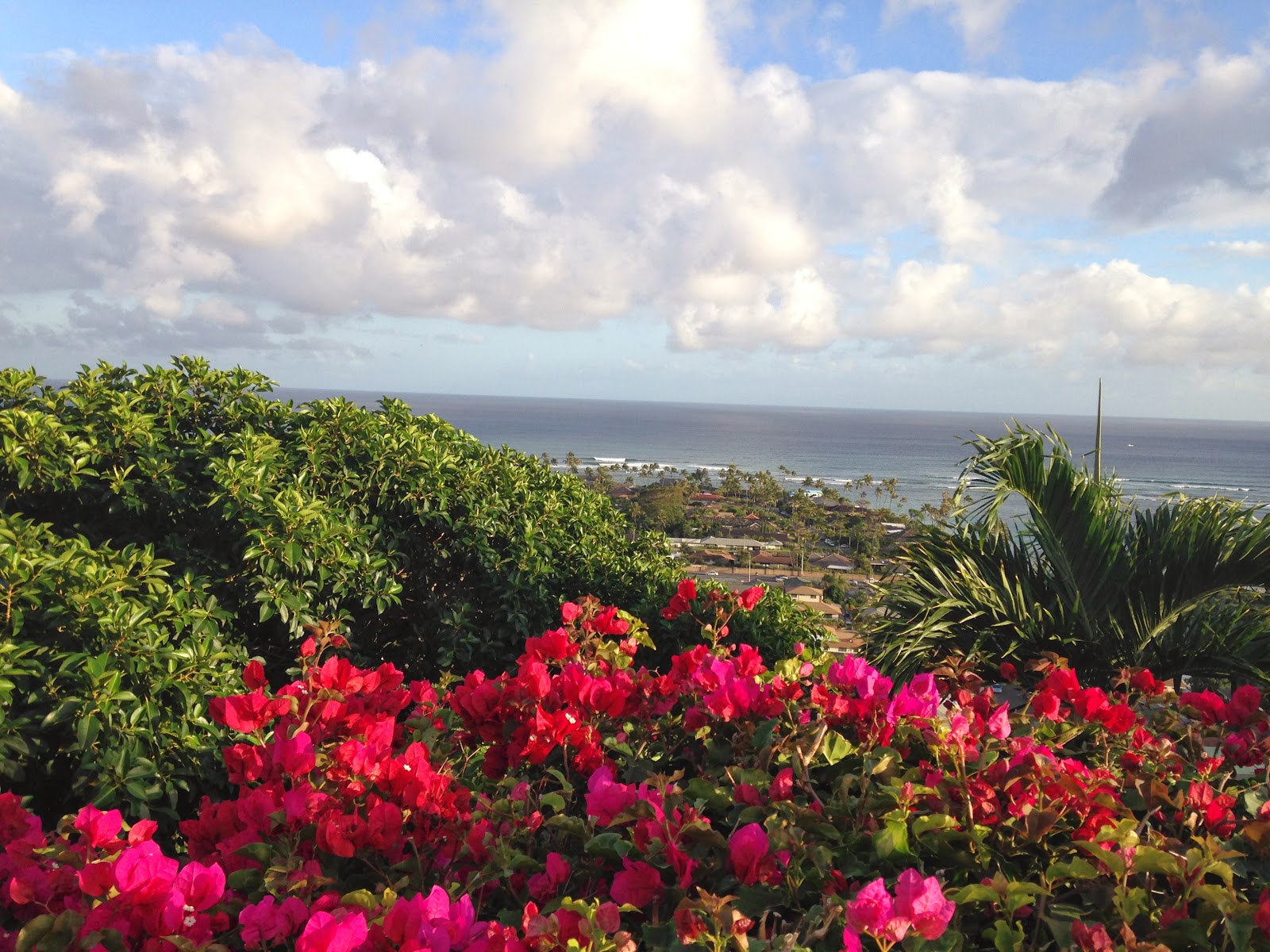
As always, this year's Hawaii/Oahu quest was to stay as far away as possible from buses of tourists and mobs crowding downtown Waikiki. Staying away from throngs of people has become my great obsession as I get older. So, staying on the "other side" of the island is a must, and I purposefully plan days that largely take us to places the "hordes" have not yet found. "Where can that be on Oahu?" you might ask. Well, there are quite a few locales that currently are almost untouched by tourists.

Chinatown in Honolulu seems it would be overrun with tour buses. But it doesn't seem to be the case. During the day at the shops and markets, and into the evening, shoppers seem mostly local. With our Honolulu friends showing us the way to good Chinese food, we also stumbled on a beautiful alter to the Quon Yin in the Cultural Plaza: a calming presence in the midst of Honolulu.




ALOHA!
Subscribe to:
Posts (Atom)